
An overview of Bulgaria's economic state
Abstract
The point of this article is to draw attention to the state of the Bulgarian economy in order to determine whether starting a business or investing are viable options. The information provided in this article will open the door for further research.
Bulgarian market segmentation

With the exclusion of "unknown industry", the Bulgarian market is mainly dominated by services and retail trade. Services include things like healthcare, consulting, education, repair, maintenance, design and data. Retail trade mainly focuses on the selling of finished products via outlets, such as groceries and clothing.
Industry segmentation based on total number of companies:
- Unknown industry - 26.7%
- Services - 23.0%
- Retail Trade - 19.7%
- Wholesale Trade - 8.1%
- Finance, Insurance, and Real Estate - 6.2%
- Transportation, Communications, Electric, Gas, and Sanitary Services - 5.1%
- Manufacturing - 4.9%
- Construction - 4.5%
- Agriculture, Forestry, and Fishing - 1.7%
- Public Sector - 0.1%
- Mining - 0.1%
(Hitzorizons, 2025)
Unknown industry refers to companies where registration information could not be obtained, typically due to smaller companies and sole traders who are not required to provide such data when registering their business.
As stated by law firm Danailova Todorov and Partners, registering a company in Bulgaria can take up to three days, if all the steps are followed and all paperwork is in order. The size of the unknown industry can also be attributed to the informal sector. Informal retail, such as farmer markets and other public selling points, as well as home-brewed businesses, are quite common in Bulgaria. Also, as written in Bulgaria's Commercial Act:
"Art. 2. The following shall not be deemed merchants: 1. natural persons engaged in farming; 2. artisans, persons providing services through their own labour or members of the professions, except where their activity may be defined as a business within the meaning of Art. 1, paragraph 3; 3. persons providing hotel services by letting rooms in their own home."
The top 10 companies in Bulgaria based on sales

While unknown industries, retail and services are the most plethoric, the largest sales in the country are done by companies involved in gas and energy. The sales of the top 10 companies in Bulgaria constitute 9.05% of total sales.
- AURUBIS BULGARIA AD - € 4.013B
- LUKOIL-BULGARIA EOOD - € 3.768B
- ASTRA BIOPLANT EOOD - € 3.72B
- KOZLODUY NPP EAD - € 3.092B
- BULGARGAZ EAD - € 2.518B
- NATSIONALNA ELEKTRICHESKA KOMPANIA EAD - € 1.973B
- BA GLASS BULGARIA EAD - € 1.526B
- SAKSA OOD - € 1.359B
- KAUFLAND BULGARIA EOOD & CO. - € 1.243B
- LUKOIL NEFTOCHIM BURGAS AD - € 1.111B
Total Sales of the TOP 10 Companies - € 24.32B
(Hitzorizons, 2025)
The top 10 companies in Bulgaria based on number of employees

- NATIONAL RAILWAY INFRASTRUCTURE COMPANY - 10,449
- ARSENAL AD - 8,951
- KAUFLAND BULGARIA EOOD & CO. - 7,577
- DSK BANK AD - 5,408
- BILLA BULGARIA EOOD - 5,113
- VAZOVSKI MASHINOSTROITELNI ZAVODI EAD - 4,798
- UNITED BULGARIAN BANK AD - 4,722
- VIVACOM BULGARIA EAD - 4,618
- EUROBANK BULGARIA AD - 4,327
- DXC BULGARIA EOOD - 4,069
Total Number of Employees of the TOP 10 Companies - 60,032
(Hitzorizons, 2025)
Employment

There's a few interesting things to note about Bulgarian employment.
As revealed by the National Statistical Institute, the employment rate of Bulgaria as of 2023 is 53.3%, with the majority of those employed being male and in urban regions. Data available by NSI Infostat is limited to 2023, as 2024 data is still being collated.
Employment rate of Bulgaria's neighbors:
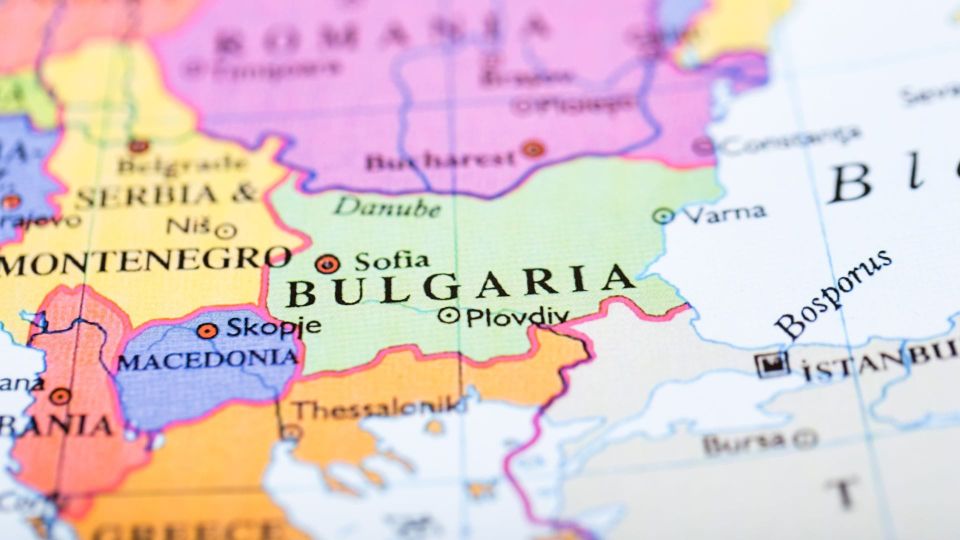
- Romania - 64.4%
- Turkey - 49.8%
- Greece - 90.78%
- Macedonia - 49.6%
- Serbia - 51.4%
(TradingEconomics, 2024)
Compared to other European countries, Bulgaria has one of the lowest employment rates. Employment rate refers to the percentage of the capable workforce are being utilized.
The age group with the highest employment rate in Bulgaria are people within the 45-54 group, with 85% of that category enjoying regular employment, a total of 843,900 people. Compared with 2022, some age groups have seen a noticeable decline in employment levels. Most noticeably people within 45-49 and 35-39. The total number of employed people from 2022 to 2023 has decreased with 0.57%. While Bulgaria has seen a noticeable improvement since the COVID-19 recession, it still hasn't fully recovered. Between 2020 and 2023 the employment rate has reduced by 5.75%, or equal to 139,900 people.
However, income has increased for all household types. The average total income per household went from 15,088 BGN in 2020, to 21,718 in 2023, a 30.52% jump. This is mainly attributed to the general increase in wages and pensions. Wages and pensions have routinely stayed Bulgaria's top forms of household income, with government benefits being the lowest, historically between 0.5% - 0.3% of the average household income.
Bulgaria also has a few interesting details regarding its tertiary education. Between 2023/2024 there have been a total of 190,513 recorded graduates, the majority of which are native, from public ownership institutions. Out of those 190,513 students, 123,335 have graduated with a Bachelor's degree, the rest being Master's and Professional Bachelor's.
In 2015, NSI has recorded that out of 27,960 recorded enterprises, 11,793 or only 42.2%, provide continuing vocational training. The database needs to be updated for more relevant results.
(National Statistical Institute, 2024)
Wage push inflation can lead to higher cost of overall goods. Bulgaria's inflation rate however has decreased considerably. On December 31st 2022 Bulgaria's inflation rate was recorded as 14.30%. By December 31st 2024, Bulgaria's inflation rate has decreased to 2.10%.
(Ycharts, 2024)
European Commission forecast

The European Commission’s recent report shows that the Bulgarian economy is supposed to have a minor, but noticeable improvement. This is due to domestic and foreign demand, as well as intensive hiring in the public sector and services. Being a member of the EU since 2007, Bulgaria has access to EU funded projects. However, as a result of the slowly diminishing unemployment it is expected that firms will refrain from acquiring new hires and curb wage increases.
|
Economic forecast for Bulgaria, 15
November 2024 |
|||
|
Indicators |
2024 |
2025 |
2026 |
|
GDP growth (%, yoy) |
2,4 |
2,9 |
3,0 |
|
Inflation (%, yoy) |
2,5 |
2,3 |
2,9 |
|
Unemployment (%) |
4,3 |
4,0 |
3,8 |
|
General government
balance (% of GDP) |
-2,6 |
-2,8 |
-2,8 |
|
Gross public debt (%
of GDP) |
24,5 |
23,1 |
24,5 |
|
Current account
balance (% of GDP) |
0,3 |
-0,2 |
-1,2 |
(EU Directorate-General for Communication, 2025)
Tax

There are a few important taxation details to keep in mind.
- Corporate tax is listed as 10%, with personal income tax being a flat 10%.
- Bulgaria currently has the lowest personal tax rate of all EU members.
- Sole traders are expected to pay a personal income tax of 15%.
- Dividends and liquidation quotas paid to residents or non-residents are liable to 5% tax. Liquidation quotas is the process of distributing assets to claimants/shareholders.
Additionally, a taxable person in Bulgaria is considered based on the following criteria:
- Non-resident legal entities are subject to withholding tax, unless dividends are administrated by a permanent establishment of the non-resident legal entity
- Non-commercial legal persons that reside in Bulgaria
- Non-resident legal entities whose receives income from a Bulgarian source, except in case of permanent establishment, royalties and license fees.
- Withholding tax also applies in case of:
- Franchising and factoring
- Income for management services provided to a Bulgarian company
- Rent income
- Capital gains
(Leinonen Group, 2023)